Hydraulic Pump Types and Selection Criteria – Gear, Vane, Piston Compared for Buyers
This article provides a professional breakdown of common hydraulic pump types, their performance characteristics, and selection criteria. It is written for engineering buyers and maintenance managers who need to make cost-effective procurement decisions.
Understanding the Basic Classification of Hydraulic pumps
From a functional perspective, hydraulic pumps fall into two primary categories based on flow adjustability.
The first category is the variable displacement pump. This type allows the output flow to be adjusted according to system demand. It offers flexibility and energy savings in variable-load applications.
The second category is the fixed displacement pump. Its output flow remains constant at a given speed. It cannot be adjusted during operation. This design is simpler and more economical for steady-load systems.
Both categories are widely used across mobile and industrial Hydraulic Systems. Your choice directly impacts system efficiency and operating costs.
Three Main Structural Types of Hydraulic Pumps in Practice
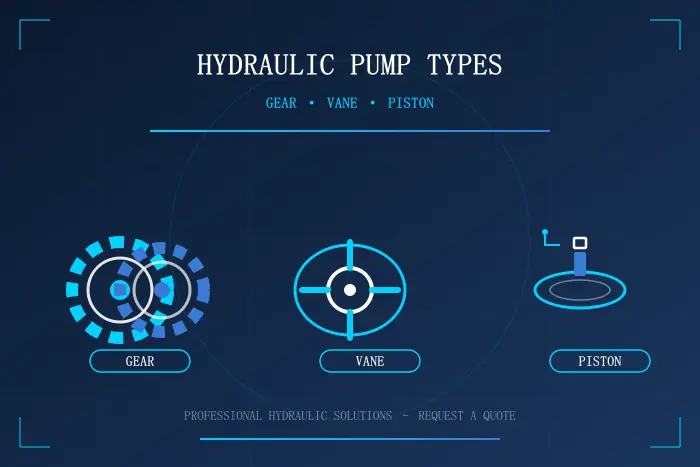
In actual hydraulic system design, engineers commonly select from three pump constructions: gear pumps, Vane Pumps, and piston pumps. Each has distinct advantages and limitations.
Gear Pumps – Compact and Cost-Effective
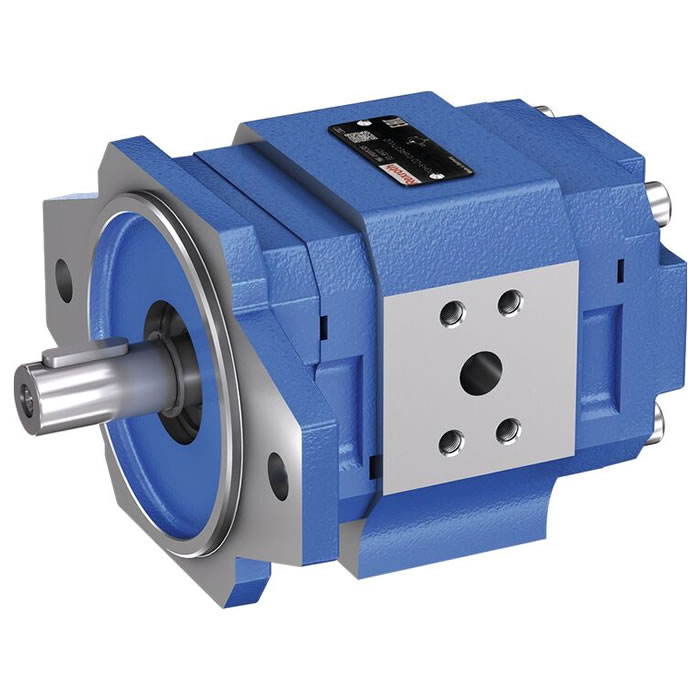
Gear pumps are among the most popular choices for low-to-medium pressure applications. Their compact size and simple structure make them easy to install and maintain.
They have fewer moving parts, which reduces initial manufacturing costs. Their price is generally the lowest among the three types. This makes them attractive for budget-conscious projects.
However, gear pumps suffer from unbalanced radial forces on the shaft. This leads to accelerated bearing wear. Internal leakage is also higher than in other designs. Efficiency drops significantly at higher pressures.
They are less sensitive to oil cleanliness compared to piston pumps. But they still require reasonable filtration to extend service life.
Vane Pumps – Balanced Flow and Quiet Operation
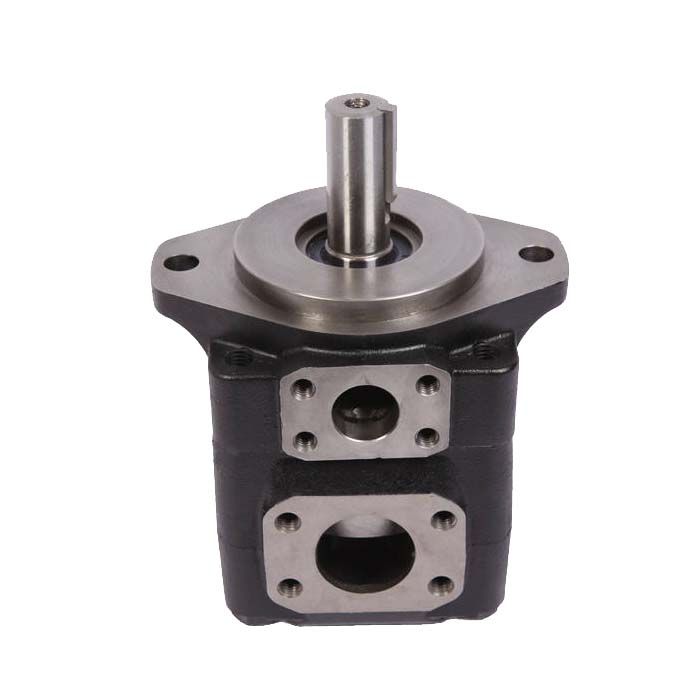
Vane pumps are further divided into double-acting and single-acting types. The double-acting design balances radial loads, reducing bearing stress.
These pumps deliver uniform flow with low pulsation. They run smoothly and generate significantly less noise than gear pumps. This makes them suitable for precision machinery and noise-sensitive environments.
Their operating pressure and volumetric efficiency are higher than those of gear pumps. However, their internal structure is more complex. Manufacturing tolerances are tighter, which increases production cost.
Vane pumps offer a good middle-ground solution. They outperform gear pumps in performance but remain more affordable than piston pumps for many medium-pressure systems.
Piston Pumps – High-Pressure Powerhouses
Piston pumps achieve the highest volumetric efficiency among all hydraulic pump types. Internal leakage is minimal, even under extreme pressures. They are the preferred choice for high-power, high-pressure hydraulic systems.
These pumps can operate continuously at pressures above 350 bar. Their robust construction supports heavy-duty cycles in construction, mining, and injection molding machinery.
However, piston pumps have the most complex structure. Material quality and machining precision requirements are extremely high. This directly translates to a higher purchase price.
They also demand strict oil cleanliness – typically ISO 16/13 or better. Contamination can cause catastrophic failure. For this reason, they are used only when gear or vane pumps cannot meet system requirements.
In many projects, engineers select piston pumps as the last resort. But when performance is critical, the investment pays off through reduced downtime and higher productivity.
Other Types – Screw Pumps and Special Designs
Screw pumps are also available in the market. They offer quiet operation and smooth flow. However, their application is less common than the three main types. They are typically used in specific industries like lubrication or fuel transfer.
Most standard hydraulic circuits rely on gear, vane, or piston pumps. Your selection should be based on pressure, flow, duty cycle, and total cost of ownership.
Selection Guidelines for Procurement Professionals
When you evaluate hydraulic pump suppliers, consider both initial price and long-term reliability. A cheaper gear pump may cost more in energy losses and maintenance over five years.
For systems with frequent load changes, a variable displacement piston pump often delivers the best energy efficiency. For fixed-speed, constant-load conveyors, a fixed gear pump is usually sufficient.
Always check the pump's continuous pressure rating, not just peak pressure. Review the manufacturer's test reports and warranty terms. Request sample units for bench testing if possible.
Our factory-direct supply covers all three pump types with certified quality. We offer competitive pricing without compromising performance. Every unit undergoes 100% hydraulic testing before shipment.
Why Choose Our Hydraulic Pumps and Motors
We are a professional manufacturer with over 15 years of production experience. Our product range includes gear pumps, vane pumps, piston pumps, and corresponding Hydraulic Motors.
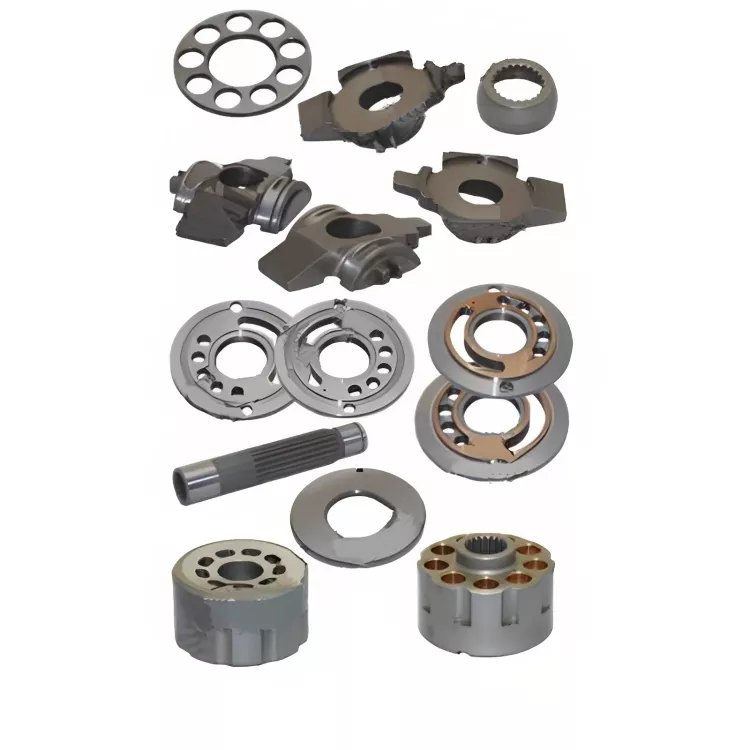
We provide OEM and ODM services with short lead times. Technical support is available for system matching and troubleshooting. We also offer spare parts kits for easy maintenance.
For bulk orders, we provide tiered discounts and flexible payment terms. Global shipping is arranged with full insurance coverage. We have served clients in more than 40 countries.
If you are planning a new project or upgrading existing equipment, send us your system parameters. Our engineers will recommend the most suitable pump model and provide a detailed quotation.
Submit your inquiry now through our website's Request a Quote form. Our sales team will respond within 2 working hours with technical datasheets and pricing.
You can also contact us directly via email or phone for urgent procurement needs. We are ready to discuss your specific application and customize solutions accordingly.