Hydraulic Torque Wrench Pump Maintenance and Failure Prevention Guide
Hydraulic Torque Wrench Pump Maintenance and Failure Prevention Guide
Hydraulic torque wrench pumps play a critical role in delivering stable hydraulic power to torque wrench systems used in heavy industrial bolting applications.
Consistent pressure output, clean hydraulic flow, and controlled operation directly determine the performance of the entire tightening system.
When these pumps operate under unstable conditions, the risk of downtime, joint failure, and reduced accuracy increases significantly.
This article explains the main failure reasons and provides structured maintenance strategies to extend service life and improve system reliability.
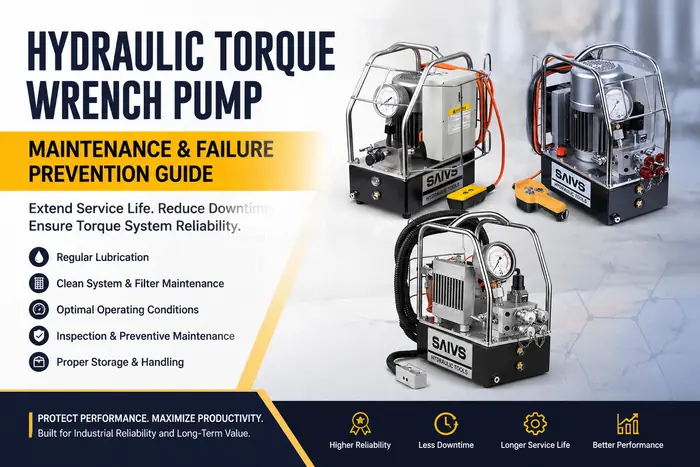
Why hydraulic torque wrench Pumps Fail in Industrial Use
Contamination and Hydraulic Fluid Issues
Hydraulic contamination is one of the most common causes of pump malfunction.
Dust, metal particles, and degraded oil can block internal channels and reduce flow efficiency.
When contamination accumulates, valves and seals begin to wear prematurely, leading to unstable pressure output.
Lubrication Deficiency and Component Wear
Insufficient lubrication increases friction between moving components inside the pump system.
This condition accelerates wear on pistons, seals, and precision control valves.
Over time, performance drops and internal leakage becomes more frequent.
Overload Operation and Pressure Misuse
Operating beyond rated pressure capacity is a major reason for sudden pump failure.
Excessive load forces internal components to work beyond their design limits.
This can cause seal rupture, valve deformation, and irreversible mechanical damage.
Environmental Storage Damage
Improper storage in high humidity or extreme temperature environments leads to corrosion inside the Hydraulic System.
Moisture ingress can also degrade hydraulic oil quality and reduce system efficiency.
Long-term exposure results in reduced reliability during operation startup.
Structured Maintenance Strategy for Longer Pump Life
Routine Lubrication and Fluid Management
Use manufacturer-recommended hydraulic oil to ensure stable viscosity and pressure response.
Regular lubrication minimizes internal friction and prevents early wear of moving parts.
Oil condition should be monitored frequently to detect contamination or degradation.
Filter Replacement and Clean System Protection
Filters must be inspected and replaced at scheduled intervals to maintain hydraulic cleanliness.
A clean hydraulic system ensures smooth flow and reduces the risk of blockage.
This step is essential for maintaining consistent torque output accuracy.
Inspection of Seals, Hoses, and Connections
Regular visual inspection helps detect early signs of leakage or structural damage.
Hoses and fittings should be checked for cracks, looseness, or wear.
Preventive replacement avoids unexpected downtime during critical operations.
Controlled Operating Conditions
Pumps should always operate within rated pressure and temperature ranges.
Stable operating conditions reduce stress on internal components and extend service life.
Overloading should be strictly avoided in all industrial applications.
Best Practices for Industrial Reliability and Efficiency
Proper Storage and Environmental Control
Hydraulic torque wrench pumps should be stored in clean, dry, and temperature-controlled environments.
Protective covers can be used to prevent dust and moisture ingress during idle periods.
This practice significantly reduces corrosion risk and startup failures.
Operator Training and System Awareness
Proper training ensures operators understand correct handling and maintenance procedures.
Well-trained personnel reduce operational errors and improve system safety.
Clear maintenance routines also increase long-term equipment stability.
Industrial Application Value
In heavy industries such as energy, oil and gas, and manufacturing, hydraulic torque systems must deliver precise and repeatable torque output.
Reliable pump performance directly affects bolt tightening quality and structural safety.
Brands like Axion focus on improving durability and operational consistency for demanding environments.
Conclusion: Improving Pump Lifespan Through Preventive Maintenance
Hydraulic torque wrench pump failures are mostly preventable through structured maintenance and correct operation practices.
Clean hydraulic fluid, proper lubrication, and controlled operating pressure are the foundation of long-term system stability.
Regular inspection routines further reduce unexpected breakdown risks and improve overall equipment efficiency.
By applying these maintenance principles, industrial users can significantly extend equipment lifespan and reduce operational downtime.
For technical support, system selection, or procurement consultation, industrial users are encouraged to contact Axion for professional hydraulic solutions and quotation requests.