Why Torque Calibration Is Important in Heavy Industry
Why Torque Calibration Is Important in Heavy Industry
Torque calibration plays a critical role in heavy industrial operations.
In industries such as oil and gas, mining, power generation, shipbuilding, wind energy, and steel manufacturing, bolted connections must maintain precise clamping force under extreme operating conditions.
If torque tools are not calibrated correctly, bolts may become too loose or excessively tightened.
This can lead to equipment failure, production shutdowns, safety risks, and expensive maintenance costs.
For industrial companies that depend on Hydraulic Torque Wrenches, pneumatic torque tools, and precision bolting equipment, regular torque calibration is essential for maintaining operational safety and long-term equipment reliability.
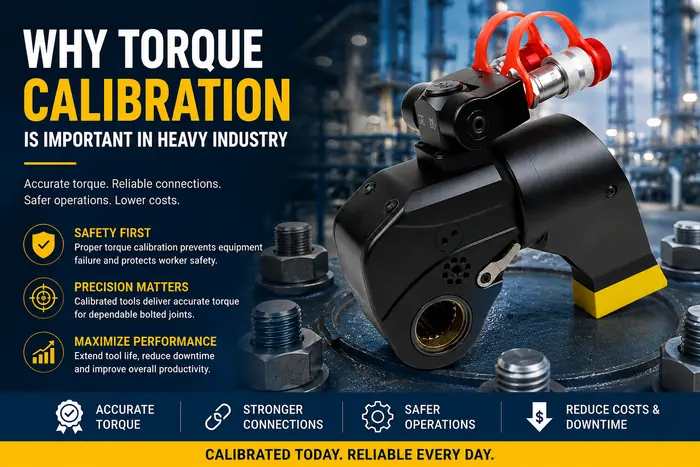
What Is Torque Calibration
Understanding Calibration Accuracy
Torque calibration is the process of testing and adjusting a torque tool to ensure the output torque matches the specified target value.
Over time, industrial torque tools experience internal wear, vibration damage, and pressure fluctuations.
These factors gradually reduce torque accuracy.
Calibration verifies that the tool continues to deliver reliable and repeatable fastening performance.
Importance of Precision Bolting
Heavy industrial equipment often operates under high pressure, strong vibration, and continuous mechanical stress.
Bolted joints must maintain exact preload force to prevent leaks, loosening, and structural failure.
Accurate torque application ensures that every fastener performs according to engineering specifications.
This is especially important for pipelines, pressure vessels, turbines, flange systems, and structural steel installations.
Why Torque Calibration Matters in Heavy Industry
Preventing Equipment Failure
Incorrect torque values can cause serious industrial failures.
Under-tightened bolts may loosen during operation.
Over-tightened bolts can crack, deform, or lose structural integrity.
In heavy industries, even a small torque deviation can create major operational risks.
Regular calibration helps eliminate these problems before they lead to downtime or accidents.
Improving Worker Safety
Industrial bolting applications often involve high-pressure systems and heavy rotating equipment.
A failed bolted connection can endanger workers and damage surrounding machinery.
Calibrated industrial torque tools improve fastening reliability and help maintain safe operating conditions.
This is especially important in refineries, offshore platforms, power plants, and mining facilities.
Maintaining Production Efficiency
Unexpected equipment shutdowns can result in significant production losses.
Torque calibration helps reduce maintenance interruptions by ensuring fasteners remain properly secured during operation.
Reliable bolting performance improves equipment uptime and reduces emergency repair costs.
For industrial facilities operating continuously, this directly improves production efficiency and profitability.
Industries That Require Accurate Torque Calibration
Oil and Gas Industry
Pipelines, valves, flanges, and pressure vessels require highly accurate bolting systems.
Even small leaks can create major environmental and safety hazards.
Calibrated Hydraulic torque wrenches help ensure safe and reliable flange tightening performance.
Wind Power and Energy Equipment
Wind turbines operate under continuous vibration and changing weather conditions.
Bolted joints must maintain stable preload force for long periods.
Torque calibration ensures consistent fastening accuracy for tower sections, blade connections, and generator assemblies.
Mining and Heavy Machinery
Mining equipment experiences extreme mechanical stress and heavy vibration.
Calibrated industrial torque tools help maintain structural stability and reduce the risk of bolt loosening during operation.
Advantages of Professional Torque Calibration Services
Higher Torque Accuracy
Professional calibration services use certified testing systems to verify tool performance.
This improves torque consistency and fastening reliability.
Longer Tool Service Life
Regular calibration inspections help identify internal wear and performance issues before major failures occur.
This extends the service life of hydraulic torque wrenches and industrial bolting equipment.
Compliance With Industrial Standards
Many industries require torque tools to comply with international quality and safety standards.
Calibration records also help companies meet inspection and audit requirements.
Choosing the Right Industrial Torque Tool Supplier
Reliable torque tool suppliers provide more than just equipment.
Professional manufacturers also offer calibration support, maintenance services, technical consultation, and customized bolting solutions.
High-quality industrial torque tools with stable calibration performance can greatly improve operational safety and maintenance efficiency.
For companies involved in heavy industrial maintenance, selecting a trusted torque equipment supplier helps reduce operational risks and improve long-term productivity.